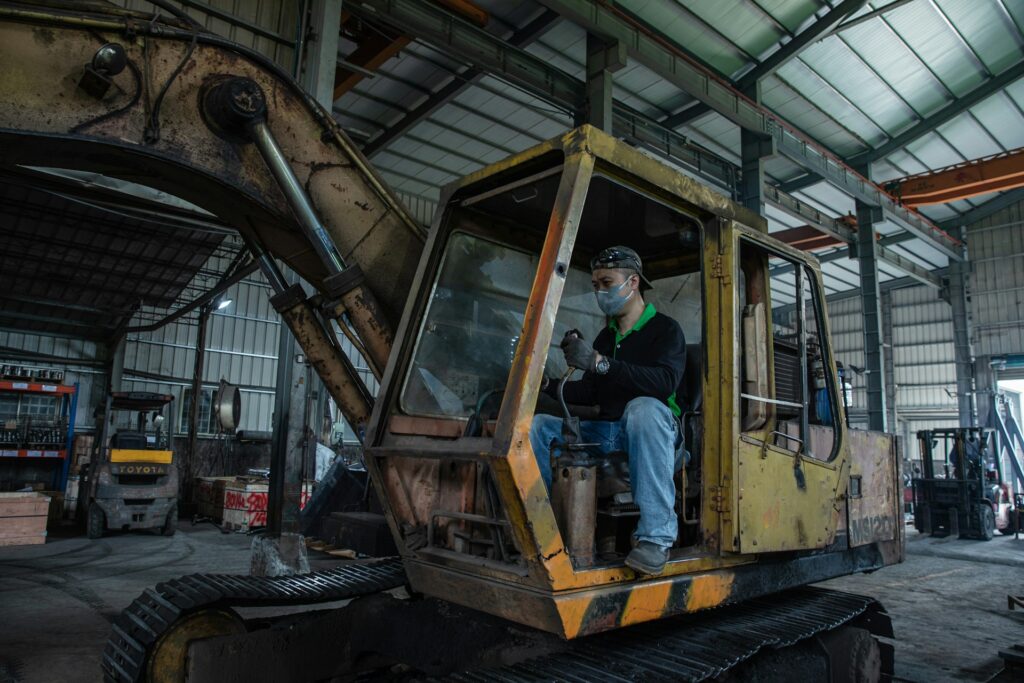
A decade ago, people often treated skilled trade work as a fallback. It was what you did when formal employment wasn’t available. That view is shifting fast. Across the continent, electricians, welders, plumbers, and machine operators now rank among the hardest workers to find. Increasingly, they’re also among the best paid.
The story behind that shift isn’t complicated. Africa is building faster than it can train people to build with. That gap is quietly reshaping what a skilled trade is worth.

A Continent Under Construction
Africa’s construction sector is expanding at a pace few other regions can match. The sector hit roughly 240 billion dollars in value in 2025. It’s on track to pass 360 billion dollars by 2031, driven by transport corridors, energy projects, and water infrastructure tied to regional trade integration, according to Mordor Intelligence. Kenya is one of the fastest-growing markets on the continent. Major road, rail, and power projects are fueling that growth. All of them depend on the same thing: people who can actually do the physical work of building them.
That demand isn’t limited to one country. It’s regional, and it’s accelerating.
Why the Demand Is Outpacing the Supply
Big infrastructure numbers only tell half the story. The other half is a widening shortage of the people needed to deliver that infrastructure. A 2026 industry report found that Africa’s construction sector faces a talent gap of 57 percent. Sub-Saharan Africa now records the highest percentage growth in demand for construction professionals anywhere in the world, according to the Business & Financial Times. Ethiopia’s demand for construction talent alone is growing at close to 8 percent a year. That’s one of the fastest rates globally.
This isn’t a temporary bottleneck. It’s a structural mismatch. Funding for projects is moving faster than training for the people meant to build them.
A Young Continent Meets an Old Skills Gap
Africa’s population is also unusually young. The median age across much of the continent sits around 19. That youth bulge pushes millions of new job seekers into the labor market every year. Infrastructure work is often their first, most direct path into employment, according to a 2026 infrastructure gap analysis by MOHAC Africa. Reliable infrastructure isn’t just an end goal, either. It’s the foundation that later digital and service-sector jobs depend on.
In other words, the same young population driving demand for infrastructure is also the workforce best placed to close the skills gap behind it.
What This Means for Pay and Opportunity
Shortages change how employers behave. When skilled workers are hard to find, wages rise to compete for them. Reports from across the region already show this pattern. Employers in construction-heavy markets are raising pay for skilled trades above the national average, simply to attract and retain workers, according to industry coverage from Africa Business Pages. South Africa’s construction sector alone added 130,000 jobs in a single quarter of 2025. That’s nearly half of all new employment the country created during that period.
This is the quiet upside of a skills gap. It’s uncomfortable for employers struggling to staff projects. For workers with real, demonstrable skill, it’s a genuine opportunity.
It’s Not Just Construction
Construction is the clearest example, but the same pattern shows up across manufacturing, logistics, and industrial sectors too. Kenya, Tanzania, Nigeria, Ghana, and Rwanda are all seeing rising demand for skilled manpower, technical supervisors, and trades-based roles well beyond the building site. Skilled trades no longer depend on one industry’s fortunes. They’re becoming foundational to how several sectors grow at once.
Why Skill Alone Isn’t Quite Enough
A widening skills gap creates opportunity. But it doesn’t automatically hand that opportunity to every skilled worker. Employers report shortages not just in technical ability, but in project coordination, communication, and reliability, the softer skills that turn a capable worker into a dependable one. Workers who can prove both technical competence and consistency capture most of the benefit from this shift. Workers relying only on informal, word-of-mouth reputation often stay invisible to the larger, better-paying projects now competing for talent.
This is where visibility starts to matter as much as ability. A shortage only helps workers that employers and clients can actually find and trust.
A Shift Worth Paying Attention To
Not every skilled worker in Africa will automatically see higher pay or steadier work. But the direction is clear. Infrastructure investment is accelerating. The workforce trained to deliver it isn’t growing fast enough to keep up. Employers are already adjusting pay and hiring practices in response. For skilled tradespeople willing to build a visible, verifiable track record, this is one of the more favorable moments the continent’s labor market has seen in years.
Where Sociconn Fits In
As demand for skilled trades grows, so does the value of being easy to find and easy to trust. Sociconn helps skilled workers build a verified profile and track record. That puts them in front of clients and employers actively looking for exactly what they offer, right as demand is rising.
Ready to Get Started?
Ready to position yourself for where the demand for skilled trades is heading? Create your Sociconn profile today. Make sure your skills are visible to the clients and projects that need them most.